
AC Tips
FPL’s AC Rebate: How It Works and Who Qualifies
Buying a new AC in Miami-Dade or Broward? If FPL is your power company, you may be able to save money right on your bill from the contractor.
FPL has a rebate for new AC systems. It is real, and it is simple once you know the rules. Below: how it works, why FPL offers it at all, how much a more efficient AC can really save you, and whether the brand or the efficiency rating matters more.
What the rebate is
As of November 2026, FPL offers a $200 instant rebate on a qualifying new AC system (FPL). “Instant” means you don’t mail anything in. It shows up as a credit on the invoice from your contractor.
There is one catch: the contractor must be on FPL’s approved list. FPL calls them Participating Independent Contractors. Sunny Coast AC is one of them.
Why FPL pays you to buy a better AC
It sounds odd for a power company to pay you to use less power. Here is the reason.
A Florida law called FEECA asks power companies like FPL to slow down how much power homes need, most of all on the hottest afternoons, when every AC is running at once. Meeting those peaks means building more power plants, which is expensive. Helping homes use less power is cheaper. The Florida Public Service Commission says these programs have saved the need for the same amount of power as about 45 peak power plants (Florida PSC).
One more thing most people don’t know: the cost of these programs is already on every FPL bill, in a charge for energy conservation. So you are already paying into it. The rebate is your chance to get some of it back.
Who qualifies
Here are FPL’s main rules:
- You have an active FPL home electric account. It has to be a residential account.
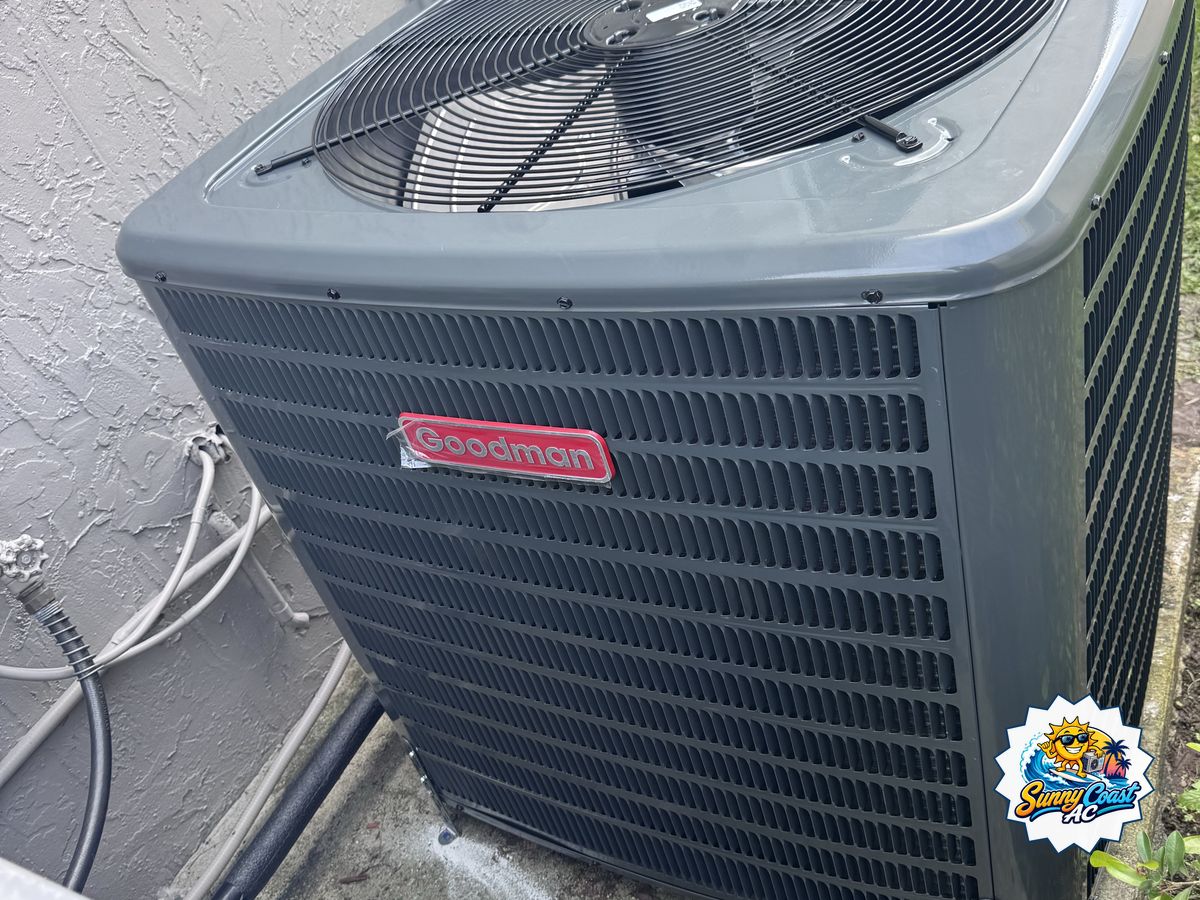
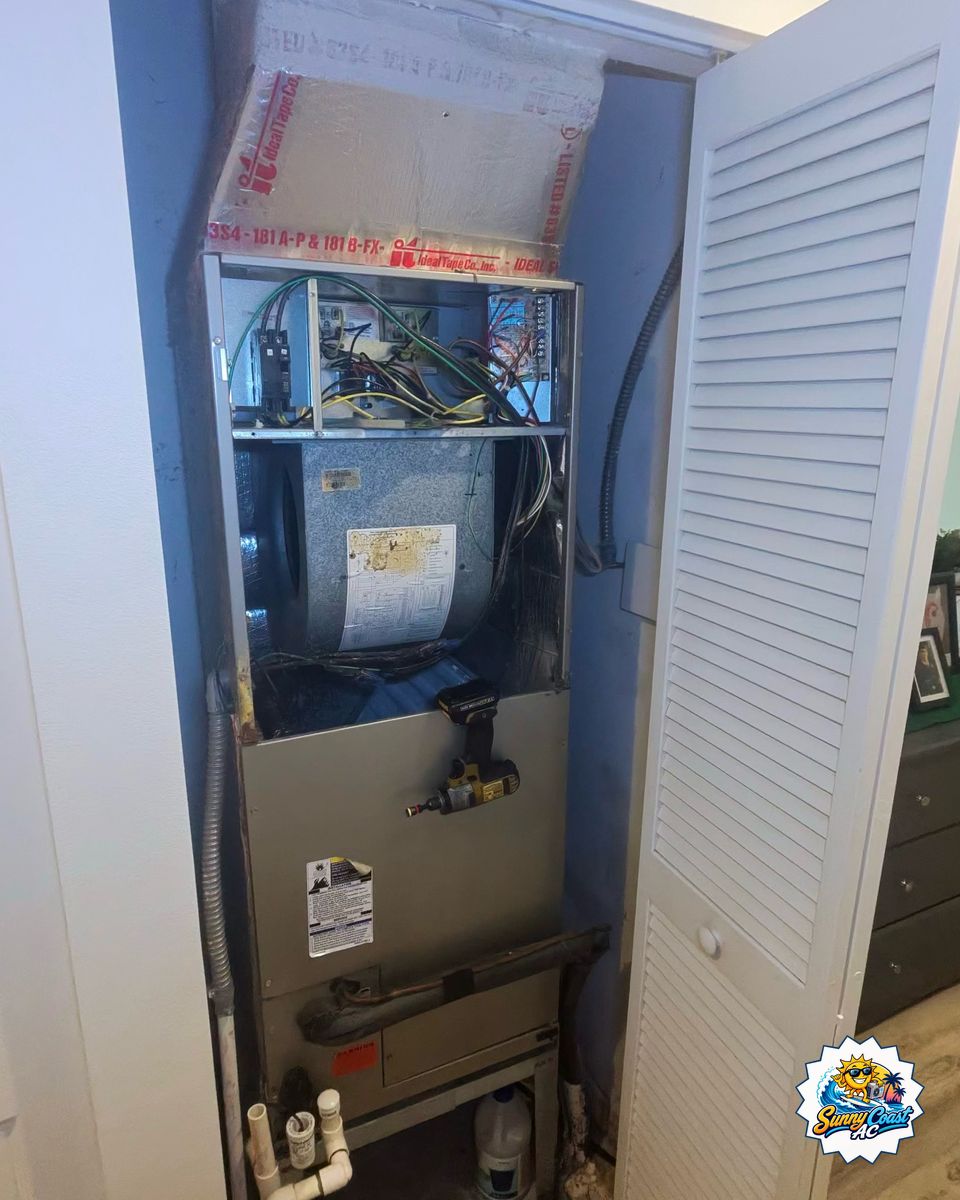
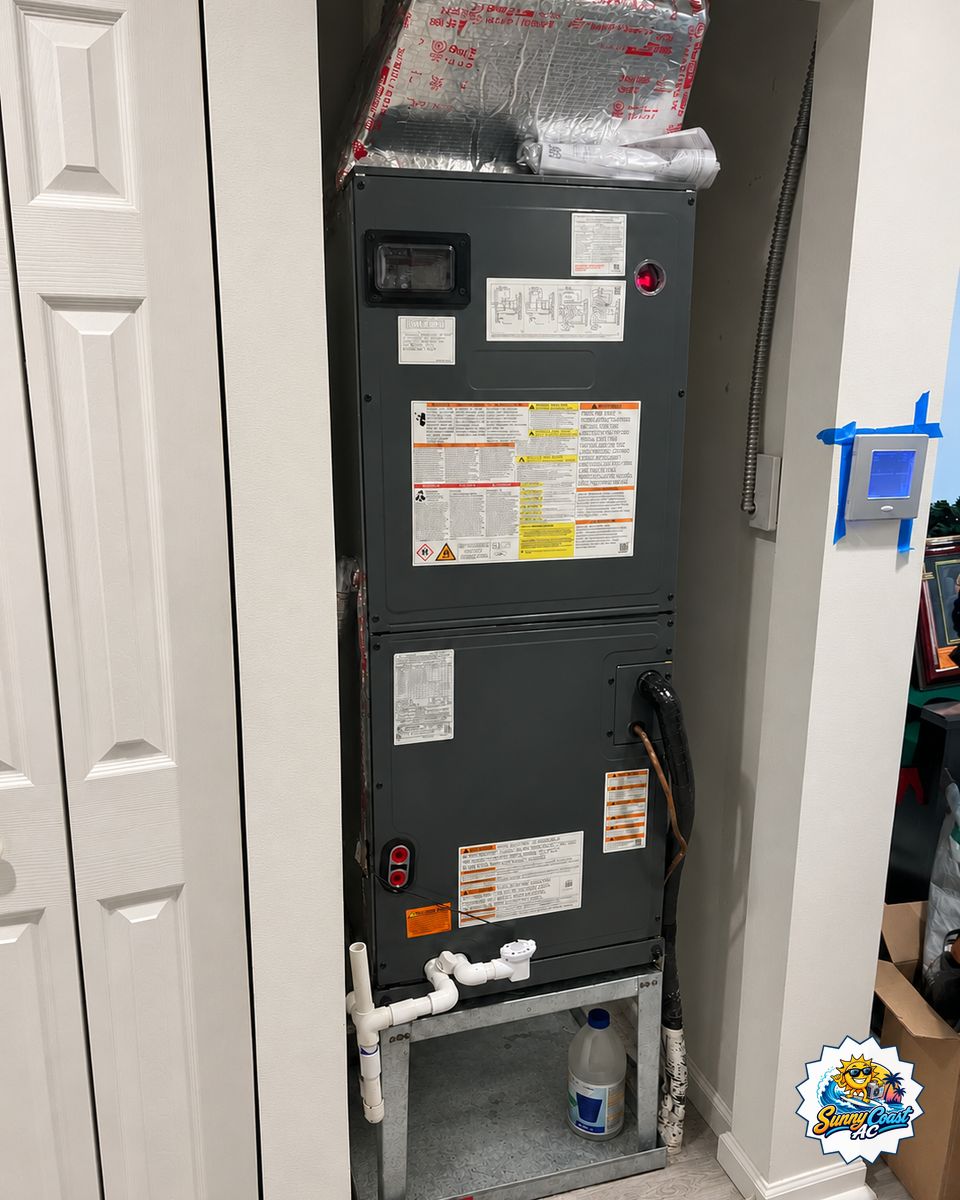
- It is a full new system. Both the indoor and outdoor parts get replaced. Replacing only one part does not count.
- It meets FPL’s efficiency rule. FPL’s page lists SEER2 15.2 and up. FPL’s contractor rules say one point above the federal minimum, which is a little higher for some sizes.
- An FPL-approved contractor installs it. You choose and hire the contractor yourself.
- No rebate on the same system in the past two years.
What does not qualify
- Window units
- Single-zone mini-splits
- Replacing only the outdoor unit, or only the indoor unit
Not sure where your home falls? That is normal. We check at the estimate.
About that SEER2 number
SEER2 tells you how much cooling you get for the power you use. Higher is better. The rating is for the indoor and outdoor parts as a matched set, not one part alone.
That is why we look up the exact rating for the exact set we quote. If an option does not qualify, we tell you before you buy. No surprises on install day.
How much can a higher SEER2 save you?
In Florida, air conditioning is about 28 percent of all the energy a home uses. In Maine it is 2 percent (U.S. Energy Information Administration, 2020 data). So here, the AC is the biggest single thing you can make more efficient.
Here is some rough math. Power use goes down as the rating goes up. Say your old AC is about 15 years old and rated around 10 SEER, which was common then. A new system at FPL’s 15.2 SEER2 is about 16 on the old scale. It uses about a third less power for the same cooling.
That is a rough guide, not a promise. Your real savings depend on how much you run the AC, what shape the old one is in, your ducts, and how well the new one is installed.
Is it worth going higher than the minimum?
Sometimes. But the first jump saves the most. Think of it like this, for the same amount of cooling:
- 10 SEER uses about 100 units of power.
- 16 SEER uses about 63. You save 37.
- 20 SEER uses 50. You save 13 more.
So going from an old system to a qualifying one is a big step. Going from good to the very top is a smaller step that costs more. Higher systems also tend to run on low speed more, which helps with humidity. We show you the numbers for each option so you can decide.
What matters more: the brand or the SEER2?
Between the two, the SEER2 rating tells you more about your power bill. The brand tells you more about features, warranty, and price. We compare Trane, Carrier, Lennox, and Goodman in Best AC brand for a Miami home?
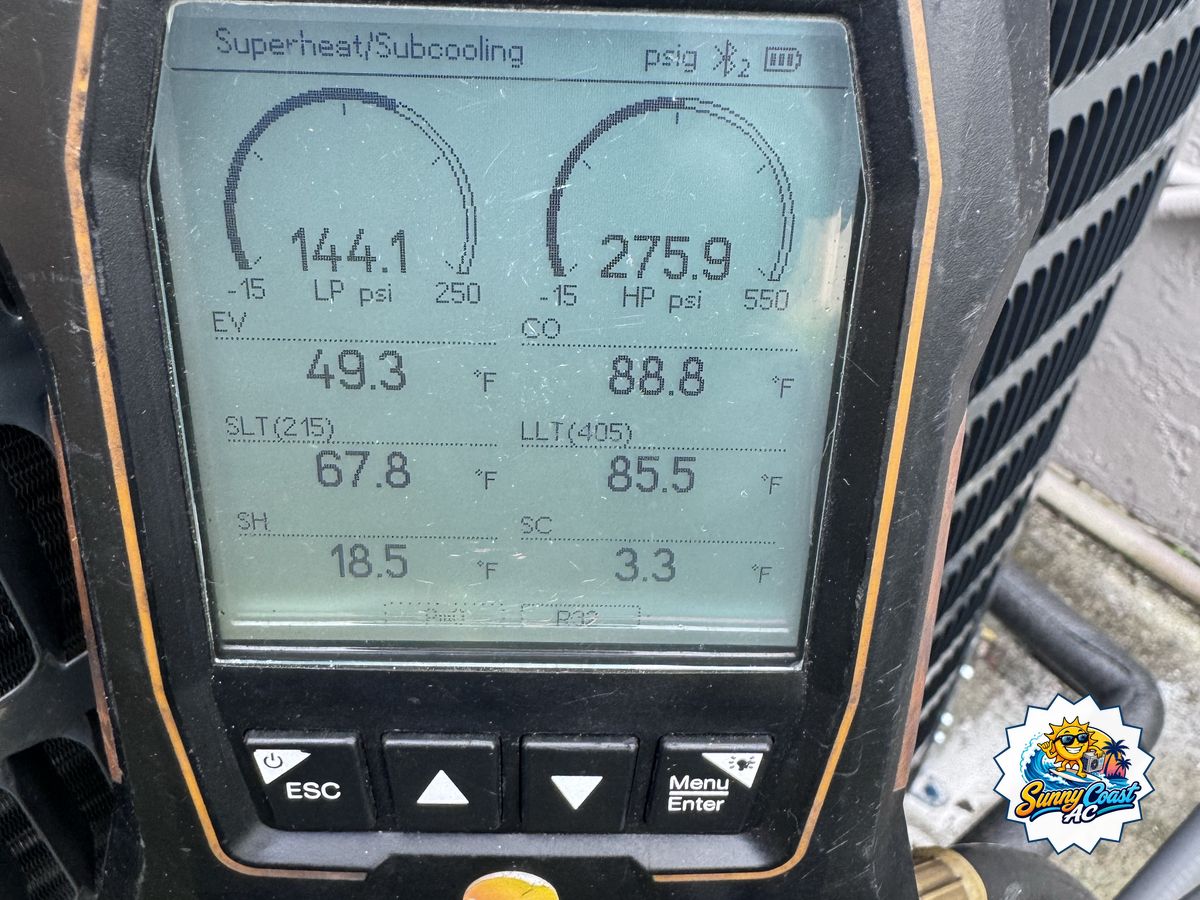
But neither one matters as much as the install. A study by NIST, a U.S. government science lab, found that install mistakes can raise heating and cooling energy use by about 30 percent. The big ones were the wrong amount of refrigerant, poor airflow, and leaky ducts. A high-SEER2 system put in wrong can use as much power as a cheaper one put in right. ACCA, the national trade group for AC contractors, makes the same point: skipping the steps in its Quality Installation standard can raise yearly energy use by 30 percent or more.
How it works with us
- We visit your home. It’s a free estimate. We look at your home, your old system, and your ducts.
- We show you options in writing. We mark which ones qualify for the FPL rebate.
- You pick, and we install. Most new system installs are done in one day.
- You sign FPL’s rebate form. We take a few photos FPL needs, like the labels on the new units.
- The $200 shows as a credit on your invoice. We handle the paperwork with FPL.
Questions people ask about the FPL rebate
Do I have to apply with FPL myself? No. You sign FPL’s form, and your approved contractor sends it in.
When do I get the money? Right away. It comes off your invoice, so you never wait for a check.
Can I also get a federal tax credit? Not for a new system put in now. The federal tax credit for efficient ACs (called 25C) ended for systems installed after December 31, 2025 (ACHR News). Ask a tax pro about your own situation.
Does every home in Miami-Dade and Broward have FPL? Most do, but not all. A few cities run their own power company. Homestead, for example, has its own, so the FPL rebate doesn’t apply there. Check the name on your power bill.
Can I get the rebate on just a new outdoor unit? No. FPL only counts a full new system, indoor and outdoor.
Can FPL end the rebate? Yes. FPL can change the program at any time, so check before you buy. We check for you at the estimate.
Check any contractor yourself
FPL has a public search for approved contractors. FPL says its list is not an endorsement, so it is still smart to read reviews and ask questions. But the list tells you who can give you the rebate.
Search FPL’s contractor list ↗
What you can do before the estimate
- Have your FPL bill handy. It shows your account is a home account, and it helps us see how hard your AC works.
- Snap a photo of the label on your outdoor unit. It helps us see the age and size of your old system.
Thinking about a new system? We check which options qualify for FPL’s rebate before you buy. The estimate for a new system is free.
Call (786) 822-6861See how a new system install works →
Where these facts come from
- FPL: A/C rebate
- FPL: A/C rebate FAQs
- FPL: Residential air conditioning program standards (effective September 1, 2025)
- FPL: Participating Independent Contractor search
- Florida Public Service Commission: FEECA primer
- U.S. Energy Information Administration: state household energy data (2020)
- ACCA: Quality installation standards
- NIST: HVAC equipment suffers due to poor installation (2014)
- ACHR News: bill ends HVAC tax incentives (2025)
Rebate details from FPL’s website, as of November 11, 2026. FPL can change the program at any time. Savings math is a rough guide, not a promise.